Note: This contribution is a strategic and communicative classification. It does not constitute legal advice and does not replace an examination by a specialized law firm or a data protection officer.
Responsibility becomes visible at digital contact points
Legal compliance and trust are not identical. Compliance with the General Data Protection Regulation forms the necessary foundation. A trust-building effect is additionally created by how comprehensibly, appropriately, and consistently a company designs its data processes for users.
A technically existing data protection notice cannot secure trust if forms request unnecessary data, selection options remain incomprehensible, or responsibilities appear hidden.
Starting point
In 2022, cookie banners, privacy policies, consent requests, and newsletter notices were a normal part of the appearance of many websites. Companies had significantly expanded their technical and legal processes since the General Data Protection Regulation came into effect.
However, this did not automatically create more clarity for users. On some pages, consent windows obscured the content. Choices were difficult to understand linguistically or visually. Forms requested more information than seemed necessary for the stated purpose. Privacy policies were extensive but hardly connected to the actual usage situation.
This experience is relevant for digital impact. A user sees no directories of processing activities and no internal contracts. They assess the company's reliability based on visible signals:
- What data is required?
- Is the purpose understandable?
- Can a selection be made freely and comprehensibly?
- Does the process fit the company's promised stance?
- Is it clear who is taking responsibility?
Data protection thus becomes an expression of deeper process quality on the surface.
What lies behind the problem
Legal texts are separated from usage
Data protection is often treated as a separate area of documentation. The privacy policy is in the footer, while forms, tracking, newsletters, and embedded services are designed independently.
From the user's perspective, however, these elements belong together. An understandable notice loses its impact if the specific query remains unclear. Conversely, a streamlined process cannot explain what processing is taking place in the background.
Transparency therefore does not arise from a single document. It arises from the consistency of information, interface, and actual process.
Possibilities are confused with necessities
Digital tools make it possible to capture many data points. This does not mean that every capture is necessary for the respective purpose or strategically sensible.
Article 5 of the General Data Protection Regulation names purpose limitation and data minimization as principles, among others. For companies, this is not just a legal requirement. Fewer and more clearly justified queries also reduce the burden of explanation and minimize avoidable friction.
A contact form for an initial inquiry does not automatically require the same depth of information as a later project onboarding. Mixing the two demands trust before the relationship has sufficiently developed.
Consent is treated as a complete solution
A consent banner can fulfill a necessary legal function. However, it does not resolve all questions regarding data usage. Even after a selection, the purpose, scope, responsibility, storage logic, and services used remain relevant.
It becomes strategically problematic when companies understand consent as a release for maximum data collection. Formal consent says little about whether a process is designed to be understandable, appropriate, and brand-consistent.
Design influences perceived fairness
Selection interfaces are part of communication. If consent and rejection are highlighted differently, terms are obscured, or steps are unnecessarily complicated, the impression arises that the desired outcome is more important than an informed decision.
The guidelines of the European Data Protection Board emphasize clear, easily accessible, and understandable information. This requirement is not just linguistic. It also concerns the way users are guided through a process.
Strategic Classification
Data protection is a minimum requirement, not a brand promise
Companies should not market data protection as a special quality feature if they are merely fulfilling legal requirements. The obligation does not become a differentiator simply because it is prominently asserted.
Nevertheless, the concrete implementation has strategic impact. It can show whether a company takes responsibility seriously, masters technical decisions, and translates complex information understandably.
The effect of trust therefore lies less in the statement "We take data protection seriously" than in the experienced consequence:
- only necessary queries
- understandable purposes
- clear selection options
- recognizable responsibility
- consistent processes across website, newsletter, and sales
Digital trust arises from agreement
Trust is the expectation that statements and behavior align. A company can position itself as transparent and customer-oriented. If its digital contact process simultaneously appears unclear or intrusive, a contradiction arises.
Conversely, a soberly designed process can support trust without overemphasizing data protection for advertising. The user experiences that their decision is respected and not replaced by design tricks.
The European Commission has explicitly emphasized the connection between data protection and trust in its information materials on the reform. For strategic practice, this means: data protection should not be added at the end of a website project. It belongs in the planning of data flows, forms, services, and communication steps.
Trust requires technical and communicative mastery
Digital trust is not solely a matter of text. It depends on the actual system architecture. If data is distributed across numerous services, the need for documentation, coordination, and explanation increases. Unclear responsibilities or missing deletion processes cannot be compensated for by a friendly interface.
Therefore, technical selection, data protection checks, and user communication belong together. A website can only be as transparent as the underlying processes.
Perspective from practice
In website projects, data protection often proves to be a litmus test for a company's actual orderliness. As soon as it needs to be concretely clarified which data a form transmits, who receives it, how long it is needed, and which systems are involved, existing ambiguities become visible.
This clarification is not an annoying add-on. It often improves the entire process. A form becomes shorter. Responsibilities become clear. Unnecessary services are eliminated. Newsletter sign-ups become more understandable. The privacy policy can be formulated closer to real usage.
The order is crucial. First, the purpose, data requirements, system path, and responsibility are clarified. Then, consent, information, and the interface are designed. Starting with the banner treats the visible symptom before the underlying process.
How data protection shapes digital trust
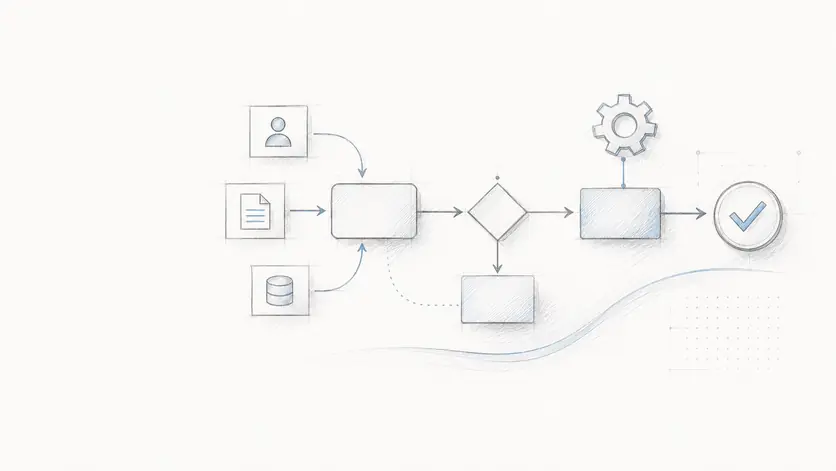
The graphic separates three levels. The legal and organizational principles form the basis. Users only experience the visible translation of this. This experience does not automatically generate loyalty, but a well-founded assessment of reliability.
Framework of action
1. Clarify purpose before data field
For every query, it should be understandable why the information is needed in the specific step. A data point that might be useful later is not automatically required upon first contact.
2. Document the complete data path
Companies should not just consider the form. Transmission, recipient, storage, access rights, further processing, and deletion are relevant. Only the complete process shows what information users actually need.
3. Integrate hints into the situation
Data protection information should be understandable where the decision is made. The detailed legal text remains necessary, but does not replace a clear notice on the form, during registration, or before activating a service.
4. Check fairness of selection options
Consent and rejection must be comprehensible in terms of language and design. Companies should check whether users are making a real decision or are merely being guided to the desired click through the interface.
5. Compare Brand Promise and Process
Those who promise transparency, partnership, or simplicity should examine digital data processes by the same standards. Contradictions damage not only the user experience but the entire positioning.
What companies should not do
Data protection should neither be used as fear-based communication nor as a decorative seal of approval. Exaggerated warnings do not produce better decisions. General statements of trust without visible consequences quickly appear interchangeable.
Companies should also not delegate responsibility entirely to a consent tool, an agency, or a legal text. These elements can provide support. However, those responsible within the company must still understand which systems and data processes are being operated.
Equally problematic is the assumption that consent once given justifies any further design. Trust depends not only on whether something was formally permitted, but whether the entire process remains comprehensible and appropriate.
Consequences for companies
Data protection belongs in the architecture of digital impact. It influences which tools are used, how forms are structured, what information is communicated, and how reliable a company is perceived to be.
Legal review remains its own specialized discipline. Nevertheless, the company must strategically take responsibility. A good process combines legal basis, technical mastery, and understandable user guidance.
The planned core contribution "The company website as a system for trust and sales" deepens the role of the website in the entire decision-making process. The contribution "Digital authority arises from evidence, not volume" additionally shows how reliability is created through comprehensible evidence.
Subject-matter connection
Website and communication strategy with clear data processes
A website and communication strategy organizes forms, services, data flows, user information, and business goals as a coherent process. Strategic work does not replace legal advice. For specific legal questions, goeke.digital can recommend a suitable specialized law firm or a data protection officer.
Systematically classify website impact and data processes
Sources and technical foundations (4)
- European Union, General Data Protection Regulation, in particular Articles 5 and 12. Open source
- European Data Protection Board, Guidelines on Transparency, adopted on May 25, 2018. Open source
- European Commission, EU Data Protection Reform. Better rules for small business, Factsheet. Open source
- European Commission, Special Eurobarometer 487: The General Data Protection Regulation, 2019. Open source